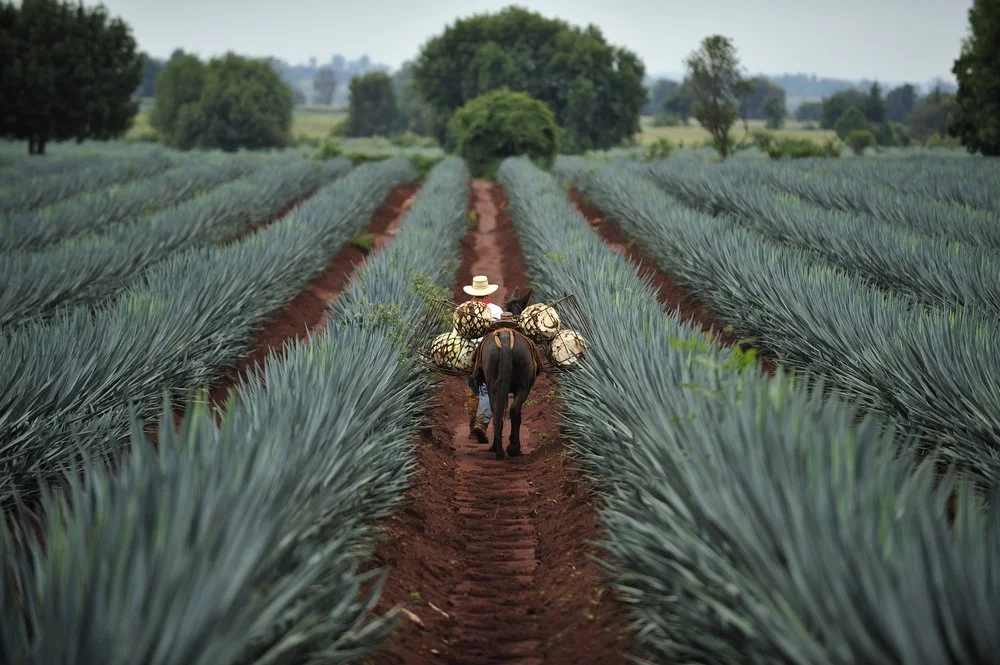
Confess Mezcal

Founder, Brand & Creative Director (In Progress)
01 / Context
Confess started as an idea—and became an ecosystem.
I wanted to build a mezcal that could look modern, taste ancestral, and exist responsibly in a system built on extraction. The goal wasn’t to create another bottle. It was to prove a point: that you can build a luxury brand that slows down, listens to the land, and still thrives.
Confess is women-owned, women-produced, and women-led—born from the soil of Oaxaca and the streets of Mexico City. It sits at the intersection of agriculture, chemistry, anthropology, and design.
I didn’t want to just tell the story of mezcal. I wanted to learn how to make it.
02 / What I Walked Into
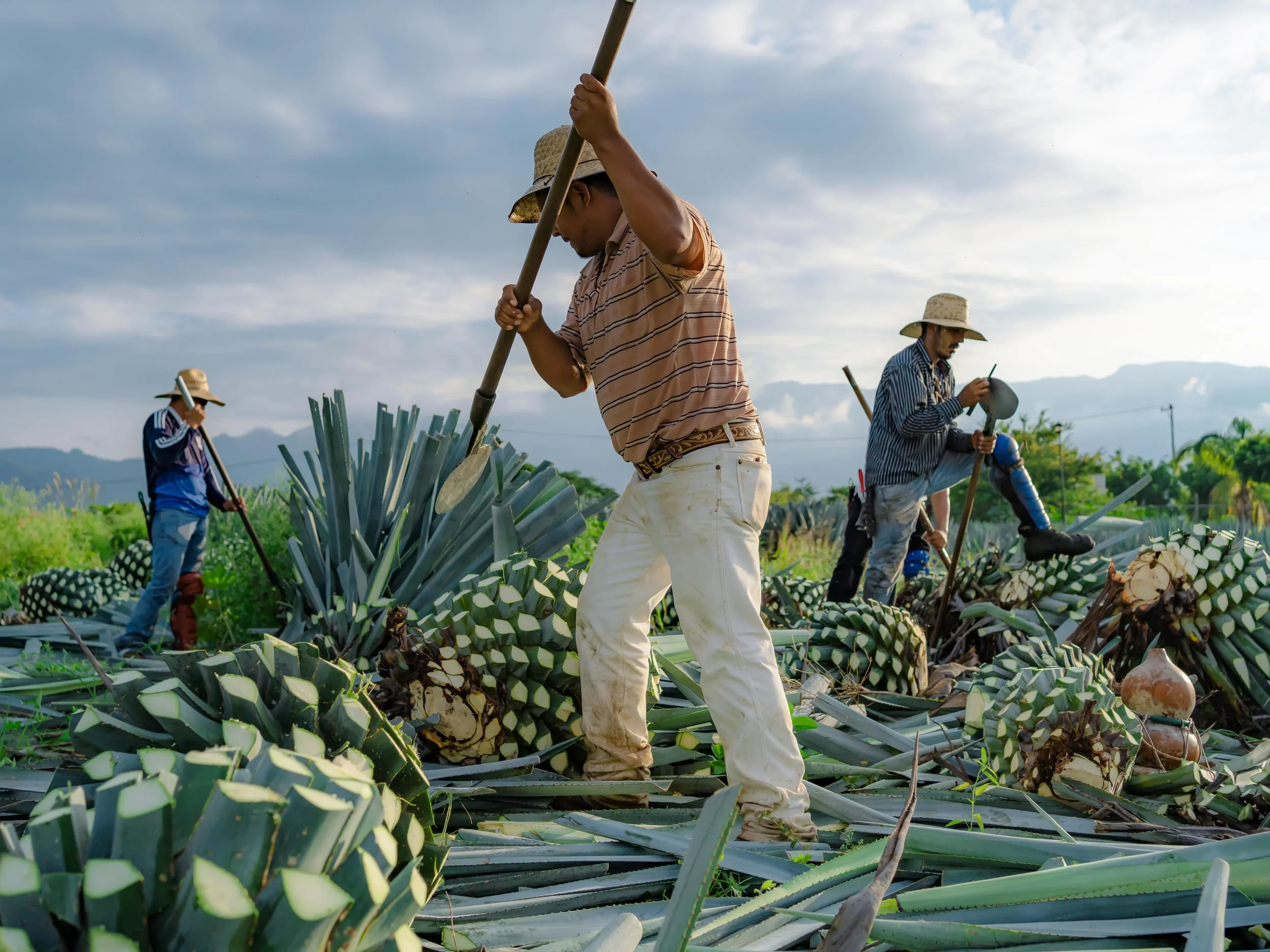
The global rise of mezcal has come at a cost. Overproduction, shortened harvest cycles, and commercialized storytelling have endangered the very agave species that sustain the craft.
When I entered the space, the challenge was clear:
Ethical dissonance. Most “premium” mezcal brands celebrated aesthetic but not accountability.
Opaque sourcing. Few disclosed who made their mezcal, how it was produced, or its impact on the environment.
Extractive marketing. Cultural stories were repackaged for export instead of being told by the people who lived them.
It wasn’t enough to make something beautiful. It had to mean something.
Confess began as a study in agricultural ethics, supply chain transparency, and cultural storytelling. I spent months learning the full life cycle—from seed to still.
Every day became a question: How can we return to slow growth, sustainable production, and honesty—without losing elegance?
03 / What I Actually Did
For 18 months, I built Confess across every axis: scientific, cultural, and strategic.
Confess was never about branding a bottle; it was about rebuilding a system of integrity from the ground up. For 18 months, I worked at every level of the process—from fieldwork to fermentation, from regulatory frameworks to storytelling.
Field & Scientific Research
Apprenticed with mezcaleros from Oaxaca, documenting differences in maguey espadín, tobalá, and madrecuixe varietals: sugar content, soil profile, roasting behavior, and yield ratios.
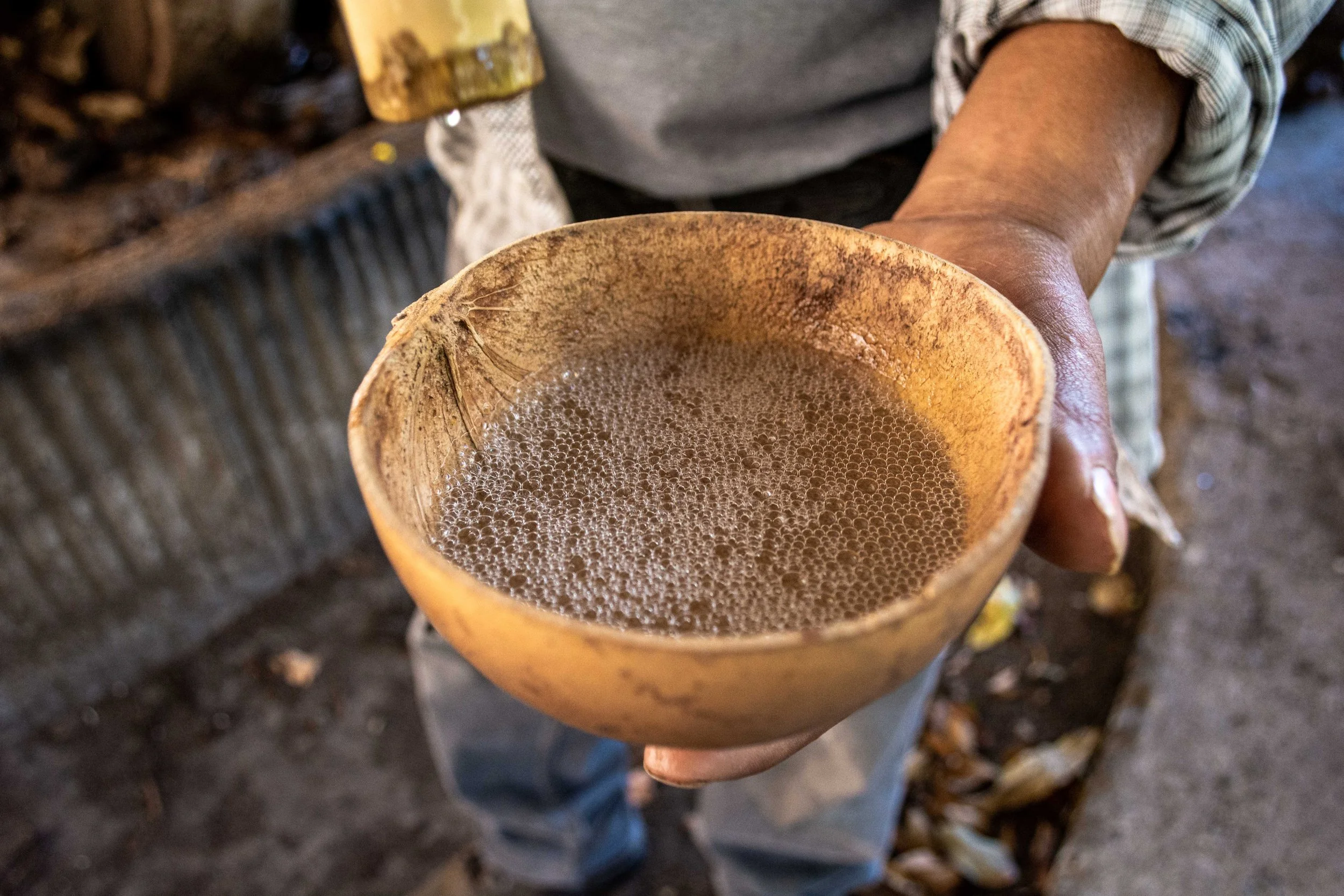
Designed fermentation-tracking protocols to record temperature, altitude, and humidity impacts on alcohol conversion—later modeled into a reproducible quality system.
Partnered with local engineers to analyze soil depletion patterns and establish re-siembra (re-planting) timelines, ensuring one hectare of regrowth for every 0.7 harvested.
Studied the chemistry of smoke flavor transfer and clay-pot distillation to map sensory consistency while keeping traditional fire-pit roasting intact.
Operational Architecture
Created the first internal playbook for mezcal operations: from jima (harvest) to bottling, including compliance documentation for CRM de Mezcal and NOM registration.
Implemented regenerative water-use loops: re-circulating cooling water and composting bagazo fiber into soil restoration beds.
Wrote supplier agreements that codified fair-wage structures, transparent yield reporting, and gender-equitable hiring.
Built a traceability matrix linking each bottle to its origin lot, mezcalero, and agave field through QR integration.
Brand & Cultural Systems
Conducted ethnographic interviews with producers and local historians to capture mezcal as social heritage, not product.
Defined the Confess naming lineage—from Latin confiteri, “to reveal truth.” It became a philosophy of honesty: come clean about process, provenance, and intent.
Developed the tagline “Come Clean” to bridge ritual and reality—transparency as luxury.
Crafted the brand’s sensory universe: scent profiles of oak smoke and rain, tactile textures in packaging, and visual tone drawn from candlelight on stone walls.
By the end of this phase, Confess had a complete technical, operational, and cultural backbone—ready for production, export, and long-term sustainability audits.
04 / How We Did It (The Work)
Step 1 / Learn before leading
I immersed myself in the full mezcal cycle—planting, harvesting, roasting, fermenting, distilling. I learned from farmers who read the wind to time their harvests. That fieldwork became the foundation of every operational decision that followed.
Step 2 / Codify intuition into systems
Traditional mezcal is guided by instinct. I translated that intuition into measurable data without sterilizing it—temperature logs, sugar readings, oxygen exposure—so art and analytics could coexist.
Step 3 / Design for closed-loop sustainability
Built a regenerative model linking agave replanting to community-managed nurseries. Each harvest funds reforestation plots and apprenticeship programs for local women entering production roles.
Step 4 / Engineer a transparent supply chain
Every producer, transport route, and process was documented, photographed, and archived. I built a digital ledger for future blockchain integration to preserve provenance and prevent cultural erasure.
Step 5 / Build the brand as a sensory language
Brand expression mirrored process: slow, deliberate, and tactile. Each creative element—color, texture, phrasing—was tested against the question “Does this feel like truth?”
Step 6 / Pause with discipline
When tariffs halted export, we treated the pause as research. I spent the next months refining data models, improving soil restoration ratios, and deepening our partnerships with academic agronomists to certify future compliance as a regenerative enterprise.
05 / What Comes Next
Confess is entering a season of reflection, not retreat. Every pause is a preparation.
The next phase is slower by design: we are deepening the agricultural backbone before scaling the brand.
Partnering with regenerative mezcaleros to complete the 2026 small-batch harvest.
Finalizing our regenerative cultivation model, built on rotational harvesting, soil remineralization, and community-managed replanting nurseries.
Developing “The Confessions Series”—a limited release of single-origin bottles, each paired with essays and film vignettes documenting the mezcalero, the land, and the year of harvest.
Partnering with agronomists and cultural preservationists to build an open-source index of agave species at risk, ensuring our growth never outpaces biodiversity.
Expanding into sensory storytelling—scent, sound, and visual studies that trace the emotional anatomy of mezcal.
Every plant, every partner, every bottle must mean something.
We’re not chasing growth. We’re building permanence.
06 / Learnings & What I’m Still Learning
Confess has been the most demanding classroom I’ve ever built for myself. It taught me that creation isn’t a sprint toward innovation—it’s a negotiation with time.
What I’ve learned:
That to become a mezcalera is to earn fluency in chemistry, culture, and compliance at once. I learned distillation science, microbial fermentation, and sensory calibration alongside CRM certification protocols and regulatory filings—because tradition alone cannot scale ethically without precision.
That every decision in agriculture is a legal, environmental, and emotional one. I learned how to write environmental impact statements, design traceable supply systems, and register NOM compliance—while still ensuring the people behind each bottle are visible and paid fairly.
That brand building in a sacred industry requires diplomacy. I negotiated with cooperatives, producers, and cultural boards to align on standards that respected both heritage and modern export frameworks.
That storytelling is infrastructure. Every touchpoint—from investor decks to agricultural contracts—has to express the same truth: Confess is not here to extract, it’s here to sustain.
That luxury can be honest. When you build transparency into pricing, sourcing, and packaging, you don’t dilute the brand—you dignify it.
What I’m still learning:
The deeper technicals of mezcal certification: CRM accreditation, export documentation, and sustainable production audits.
How to merge science and soul without compromise—how lab-grade data and ancestral wisdom can inform each other instead of compete.
How to scale a regenerative supply chain without surrendering its intimacy—and how to teach that balance to future producers.
How to tell stories that expand beyond the bottle—stories that become frameworks for circular business.
How to measure success not by revenue or reach, but by what returns to the land.
Confess made me fluent in systems and in silence—in the science of fermentation, and in the patience it demands.
The brand is paused, but the work continues. The fields are growing again, and so am I.